Buy ksbog.com ?
We are moving the project
ksbog.com .
Are you interested in purchasing the domain
ksbog.com ?
domain@kv-gmbh.de · 0541-91531010
Buy ksbog.com ?
Which lens is better, the Canon EF 50mm f/1.8 STM or the EF 50mm f/1.4 USM?
Both lenses have their own strengths. The Canon EF 50mm f/1.8 STM is known for its affordability and lightweight design, making it a great option for beginners or those on a budget. On the other hand, the EF 50mm f/1.4 USM offers a wider aperture, which allows for better low-light performance and more creative control over depth of field. If budget is a concern, the EF 50mm f/1.8 STM is a solid choice, but if you prioritize image quality and low-light performance, the EF 50mm f/1.4 USM may be the better option. **
What is the difference between the Sony lenses E 50mm f/1.8 OSS and FE 50mm f/1.8?
The main difference between the Sony lenses E 50mm f/1.8 OSS and FE 50mm f/1.8 is their mount compatibility. The E 50mm f/1.8 OSS is designed for Sony's E-mount cameras, while the FE 50mm f/1.8 is designed for Sony's full-frame E-mount cameras. This means that the FE 50mm f/1.8 is compatible with both full-frame and APS-C sensor cameras, while the E 50mm f/1.8 OSS is only compatible with APS-C sensor cameras. Additionally, the FE 50mm f/1.8 may offer slightly better image quality and performance due to its full-frame design. **


Similar search terms for Fujifilm-XF-50mm-f
Top-Angebote
Products related to Fujifilm-XF-50mm-f:
-
7Artisans 50mm f/1.2 Fujifilm X- Fast 50mm Lens for APS-C system cameras - fantastic bokeh thanks to f/1.2 aperture - Ideal for portraits and low-light scenes - equivalent to approx. 75mm in 35mm format - sturdy and durable metal body - Filter thread: 55mm109,00 €*Shipping: 9,95 €Secure redirect to the provider
-
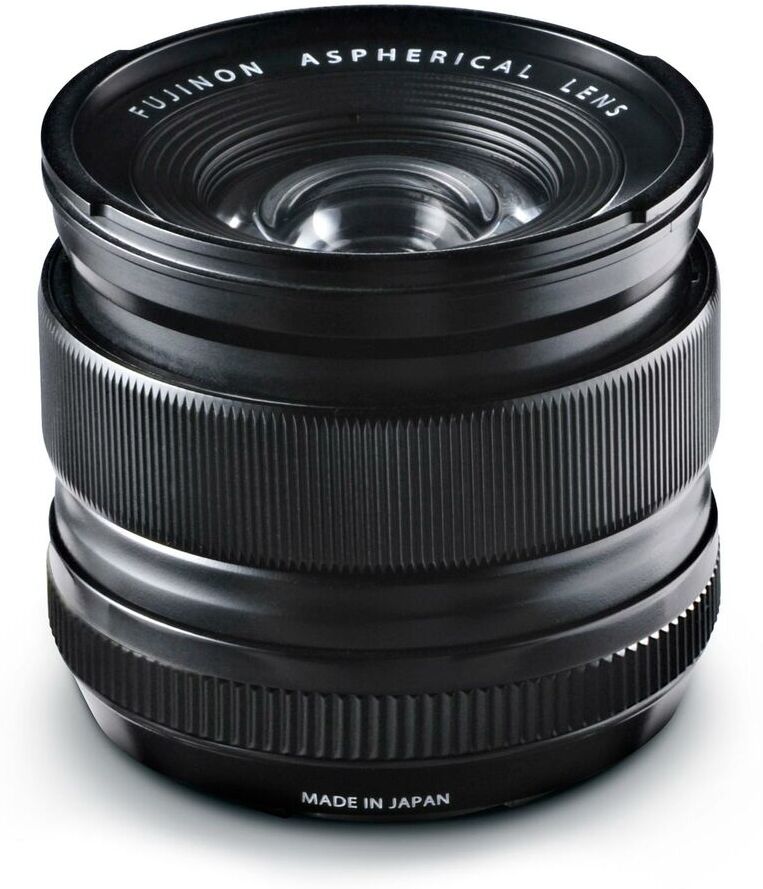
XF 14mm f/2.8 R Fujifilm X black- Ultra Wide Angle Lens - XF 14 mm (21 mm equivalent KB) - very fast 2.8 - ideal under difficult lighting conditions - extreme angle of view - pleasant bokeh - suitable for mirrorless Fujifilm cameras with X-mount connection in APS-C format887,19 €*Shipping: 0,00 €Secure redirect to the provider



-
What is the difference between a focal length of 50mm and an aperture of f/5.6 compared to f/1.8?
The difference between a focal length of 50mm and an aperture of f/5.6 compared to f/1.8 is the amount of light that enters the camera and the depth of field. A focal length of 50mm remains the same in both cases, but the aperture of f/5.6 allows less light to enter the camera compared to f/1.8. Additionally, f/5.6 provides a larger depth of field, meaning more of the image will be in focus, while f/1.8 creates a shallower depth of field, resulting in a more pronounced background blur. **
-
What is larger, XF or XXL?
XXL is larger than XF. XXL typically refers to extra extra large, while XF does not have a standard size reference in clothing or other commonly used measurements. In general, XXL would be considered a larger size than XF. **
-
What is bigger, XF or XXL?
XXL is bigger than XF. XF typically refers to extra small or extra fine, while XXL refers to extra extra large. Therefore, XXL is larger in size than XF. **
-
Will a 50mm f/1.4 Sigma DG HSM Art lens fit on an APS-C camera?
Yes, the 50mm f/1.4 Sigma DG HSM Art lens will fit on an APS-C camera. The lens is designed for full-frame cameras, but it is also compatible with APS-C cameras. When mounted on an APS-C camera, the lens will have a focal length equivalent to around 75mm due to the crop factor, making it a great choice for portrait photography. **


Which lens is better suited for street photography on the Sony A6300: the Sony FE 85mm f/1.8 or the 50mm f/1.8?
For street photography on the Sony A6300, the 50mm f/1.8 lens would be better suited than the 85mm f/1.8. The 50mm focal length is more versatile for capturing a variety of street scenes and allows for a wider field of view, making it easier to frame shots in dynamic environments. Additionally, the 50mm lens is more compact and lightweight, which is advantageous for shooting on the go and blending in with the surroundings. **
How can one construct a trapezoid with side lengths a = 50mm, b = 44mm, c = 36mm, and f = 73mm?
To construct a trapezoid with the given side lengths, start by drawing a line segment of length 50mm. Then, draw another line segment of length 44mm starting from one endpoint of the first line segment. From the other endpoint of the first line segment, draw a line segment of length 36mm. Finally, draw a line segment of length 73mm starting from the endpoint of the second line segment that is not connected to the third line segment. These line segments should form a trapezoid with the given side lengths. **
Top-Angebote
Products related to Fujifilm-XF-50mm-f:
-
Fujifilm X-T50 + XF 16-50mm + XF 35mm f/2.0 R WR blackFujifilm XF 35mm f/2.0 R WR with mount: Fujifilm X in the color black beautiful bokeh excellent image quality even in difficult lighting conditions Weatherproof, dustproof and cold-resistant2188,34 €*Shipping: 0,00 €Secure redirect to the provider
-
7Artisans 50mm f/1.2 Fujifilm X- Fast 50mm Lens for APS-C system cameras - fantastic bokeh thanks to f/1.2 aperture - Ideal for portraits and low-light scenes - equivalent to approx. 75mm in 35mm format - sturdy and durable metal body - Filter thread: 55mm109,00 €*Shipping: 9,95 €Secure redirect to the provider
-
Which lens is better, the Canon EF 50mm f/1.8 STM or the EF 50mm f/1.4 USM?
Both lenses have their own strengths. The Canon EF 50mm f/1.8 STM is known for its affordability and lightweight design, making it a great option for beginners or those on a budget. On the other hand, the EF 50mm f/1.4 USM offers a wider aperture, which allows for better low-light performance and more creative control over depth of field. If budget is a concern, the EF 50mm f/1.8 STM is a solid choice, but if you prioritize image quality and low-light performance, the EF 50mm f/1.4 USM may be the better option. **
-
What is the difference between the Sony lenses E 50mm f/1.8 OSS and FE 50mm f/1.8?
The main difference between the Sony lenses E 50mm f/1.8 OSS and FE 50mm f/1.8 is their mount compatibility. The E 50mm f/1.8 OSS is designed for Sony's E-mount cameras, while the FE 50mm f/1.8 is designed for Sony's full-frame E-mount cameras. This means that the FE 50mm f/1.8 is compatible with both full-frame and APS-C sensor cameras, while the E 50mm f/1.8 OSS is only compatible with APS-C sensor cameras. Additionally, the FE 50mm f/1.8 may offer slightly better image quality and performance due to its full-frame design. **
-
What is the difference between a focal length of 50mm and an aperture of f/5.6 compared to f/1.8?
The difference between a focal length of 50mm and an aperture of f/5.6 compared to f/1.8 is the amount of light that enters the camera and the depth of field. A focal length of 50mm remains the same in both cases, but the aperture of f/5.6 allows less light to enter the camera compared to f/1.8. Additionally, f/5.6 provides a larger depth of field, meaning more of the image will be in focus, while f/1.8 creates a shallower depth of field, resulting in a more pronounced background blur. **
-
What is larger, XF or XXL?
XXL is larger than XF. XXL typically refers to extra extra large, while XF does not have a standard size reference in clothing or other commonly used measurements. In general, XXL would be considered a larger size than XF. **
Similar search terms for Fujifilm-XF-50mm-f
-
XF 14mm f/2.8 R Fujifilm X black- Ultra Wide Angle Lens - XF 14 mm (21 mm equivalent KB) - very fast 2.8 - ideal under difficult lighting conditions - extreme angle of view - pleasant bokeh - suitable for mirrorless Fujifilm cameras with X-mount connection in APS-C format887,19 €*Shipping: 0,00 €Secure redirect to the provider
-
Fujifilm X-T50 + 16-50mm silver- Fujifilm X-T50 - compact system camera with 40.2 megapixel sensor - 6.2K video - Film simulation dial - high image quality - foldable LCD monitor with 1.84 million pixels - ultra-fast exposure times up to 1/180,000 second - 5-axis image stabilization with up to seven aperture stops - with Fujifilm XF16-50mm f/2.8-4.8 R LM WR1823,44 €*Shipping: 0,00 €Secure redirect to the provider
-
What is bigger, XF or XXL?
XXL is bigger than XF. XF typically refers to extra small or extra fine, while XXL refers to extra extra large. Therefore, XXL is larger in size than XF. **
-
Will a 50mm f/1.4 Sigma DG HSM Art lens fit on an APS-C camera?
Yes, the 50mm f/1.4 Sigma DG HSM Art lens will fit on an APS-C camera. The lens is designed for full-frame cameras, but it is also compatible with APS-C cameras. When mounted on an APS-C camera, the lens will have a focal length equivalent to around 75mm due to the crop factor, making it a great choice for portrait photography. **
-
Which lens is better suited for street photography on the Sony A6300: the Sony FE 85mm f/1.8 or the 50mm f/1.8?
For street photography on the Sony A6300, the 50mm f/1.8 lens would be better suited than the 85mm f/1.8. The 50mm focal length is more versatile for capturing a variety of street scenes and allows for a wider field of view, making it easier to frame shots in dynamic environments. Additionally, the 50mm lens is more compact and lightweight, which is advantageous for shooting on the go and blending in with the surroundings. **
-
How can one construct a trapezoid with side lengths a = 50mm, b = 44mm, c = 36mm, and f = 73mm?
To construct a trapezoid with the given side lengths, start by drawing a line segment of length 50mm. Then, draw another line segment of length 44mm starting from one endpoint of the first line segment. From the other endpoint of the first line segment, draw a line segment of length 36mm. Finally, draw a line segment of length 73mm starting from the endpoint of the second line segment that is not connected to the third line segment. These line segments should form a trapezoid with the given side lengths. **
* All prices are inclusive of VAT and, if applicable, plus shipping costs. The offer information is based on the details provided by the respective shop and is updated through automated processes. Real-time updates do not occur, so deviations can occur in individual cases. ** Note: Parts of this content were created by AI.